Your ad sends people to your site. Does your site tell Meta anything back?
A Facebook or Instagram ad does not end with the click: it ends on your website, where Meta has to learn whether the visitor booked, called or left. On 16 October 2026 we read the home pages of 580 commercial websites in Cluj, Romania, and counted how many are ready for that moment.
By Cittago, a digital studio in Cluj-Napoca since 2011

Most advertisers check every detail of the ad and almost nothing on the page it lands on. That page decides what Meta's delivery system learns. If the site never reports who submitted a form or made a booking, the system optimises for what it can see, which is clicks.
We measured how common the setup is on 580 commercial websites in Cluj County, Romania: 408 link to Facebook or Instagram, 82 carry the Meta Pixel directly in their code, 45 carry Meta's domain verification tag. The checks behind those numbers are the same anywhere in the European Union.
What you take away: four checks you can run on your own site in ten minutes, what Meta's own help pages said on 16 October 2026, and the 28 October 2026 change that affects anyone advertising in the EU.
- Know whether your site can report anything about ad visitors before you spend the first euro.
- See how your link looks when someone shares it on WhatsApp or Facebook.
- Tell apart what you can fix yourself and what needs a developer or your site supplier.
- Know what to do before 28 October 2026.
Three things a website needs before Meta ads
A website ready for Meta ads has three things: a way to tell Meta what the visitor does, proof that the domain is yours, and a preview image for shared links.
The first is the Meta Pixel, a snippet of code that reports page views, form submissions, bookings or purchases back to Meta. Without it, Meta knows only that someone clicked. The delivery system learns from whatever it receives: give it clicks and it looks for people who click; tell it who submitted the form and it starts looking for people like them.
Next to the Pixel, Meta has recommended the Conversions API for several years: the same events, sent from your server instead of the visitor's browser. Meta's own page, read on 16 October 2026, says data sent this way is “less impacted than the Meta Pixel by browser loading errors, connectivity issues and ad blockers.” It is optional. It is a second road for when the first one is blocked.
The second is domain verification. Meta's help page, read the same day, explains that it “helps us ensure that only the rightful parties can edit link previews that direct to your content,” that it is free, and that there are three methods: a meta tag on the home page, an HTML file on the server, or a DNS TXT record. The third is the link preview itself: the image and title that appear when someone shares your site, taken from two tags called og:image and og:title.
Open your home page in Chrome, right-click, “View page source”, and search for three strings: “fbevents” (the Pixel), “GTM-” (Google Tag Manager, where the Pixel may live instead) and “facebook-domain-verification” (the verification tag). Then send yourself your own link on WhatsApp and look at the card.
What a Meta Pixel audit of 580 Cluj websites found
To get numbers rather than impressions, we took every business in Cluj County listed in OpenStreetMap, the free, volunteer-built map of the world, with a website address. That gave 940 distinct domains. On 16 October 2026 we downloaded each home page: 711 answered with a page, and after removing schools, universities, town halls, places of worship, banks and museums, 580 commercial sites remained. Restaurants, hotels and guesthouses, car repair shops, retailers, clinics, IT firms, offices.
Seven in ten link to Facebook, one in seven can measure
We read the home page of 580 commercial websites in Cluj County, Romania, and looked in the served code for the signals Meta relies on when someone lands on the site from an ad.
Source: Cittago audit, 16 October 2026 · home pages of 580 commercial websites in Cluj County, OpenStreetMap set · cittago.com
| % of 580 websites | |
|---|---|
| Link to Facebook or Instagram | 70.3% |
| Link preview image | 46.0% |
| Consent platform | 42.2% |
| Google Tag Manager | 35.2% |
| Meta Pixel in the code | 14.1% |
| WhatsApp button | 10.3% |
| Meta domain verification | 7.8% |
Read top to bottom. 408 of 580 sites (70.3%) link to Facebook or Instagram: 394 to Facebook, 282 to Instagram. The businesses are on social media and want people to find them there. Only 82 of 580 (14.1%) carry the Meta Pixel directly in the page code. Another 204 (35.2%) run Google Tag Manager, where a Pixel could be hidden from view, so the honest figure is a range: between 82 and 229 sites, 14.1% to 39.5%. Even at the top of that range, six sites in ten have no way of reporting anything back.
The combination we cared about most: sites that send people to Facebook or Instagram but have neither a Pixel nor Tag Manager. That is 221 of the 408 with social links, or 54.2%. For a business that does not advertise, that is perfectly fine. For one about to start, it means the road back from the ad has not been built.
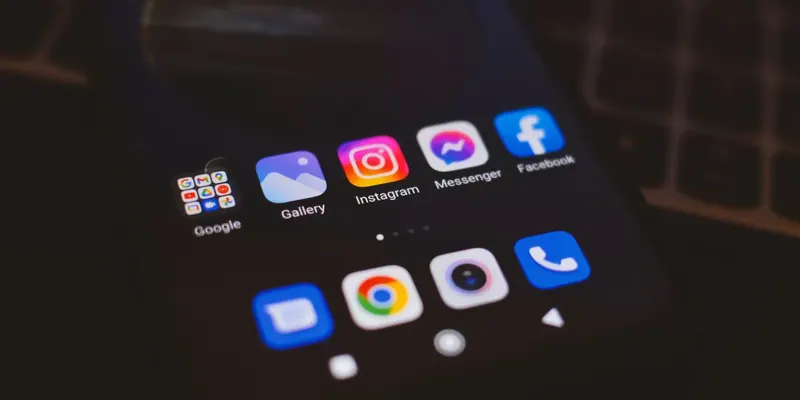
Domain verification and link previews, by the numbers
Domain verification is the rarest signal in the set. Only the meta-tag method is visible from outside, and we found it on 45 of 580 sites (7.8%), including 20 of the 82 with a visible Pixel (24.4%). Sites verified by DNS or file are invisible to us, so 45 is a floor, not a count.
Link previews are easier to see. 267 sites (46.0%) set a preview image and 360 (62.1%) a preview title. Among the 408 sites that link to social media, only half, 206, set the image. The other half shows up in shares as a card with no picture or a random one.
By sector, restaurants track the average: 13 of 98 cafés, bars, restaurants and fast-food places (13.3%) carry the Pixel. Accommodation does not. Of 77 hotels, guesthouses and apartments, 51 link to Facebook or Instagram, 3 carry the Pixel (3.9%) and none carry the verification tag. A plausible reason, which the set cannot prove, is that many sell through booking platforms, so the booking happens there. If you want direct bookings without commission, the site becomes the till, and the till needs to count.
Who Facebook and Instagram ads reach in Romania
Instagram is the only one that grew in a year
Ad reach is the number of people Meta's tools say an ad can target. It is not monthly active users, and DataReportal says so explicitly.
Source: DataReportal, Digital 2026: Romania, from Meta's advertising tools, October 2025 · cittago.com
| million people, October 2025 | |
|---|---|
| 10.3 | |
| Messenger | 7.3 |
| 6.0 |
According to DataReportal's Digital 2026 Romania report, drawing on Meta's advertising tools as of October 2025, Facebook reaches 10.3 million people in Romania, equal to 54.3% of the population and 67.1% of adults. Instagram reaches 6.00 million, 39.6% of adults, and is the only one of the three that grew between October 2024 and October 2025, by 450,000 people or 8.1%. Messenger fell by 550,000 (7.0%) to 7.30 million. The report warns that ad reach is not monthly active users. The report gives no separate figure for Cluj; you see it in your own account when you set the location.
What changed for Meta advertisers in the EU
Since 6 October 2025, Meta no longer runs political, electoral or social issue ads in the European Union; its update that day says such ads “are no longer able to be delivered in the EU.” An ordinary commercial ad that touches the environment or a local cause can be classified as a social issue ad and rejected.
On 28 October 2026, according to a notice sent to advertisers and reported by PPC Land on 15 October 2026, Meta adds “product browsing” to existing ads: an in-app experience with product details and suggestions. PPC Land writes that it found no Meta help page or announcement on the change. The notice carries an opt-out button valid until 28 October, and the feature can also be switched off ad by ad. The question for you is whether you want visitors on your site or inside the app.
On budgets, Meta's minimum-budget page, read on 16 October 2026, says the minimum depends on country, objective and bid strategy, and that with a cost per result goal “your daily budget should be at least 5 times the amount of your cost per result goal.” Their example, in dollars: a goal of 5 needs a daily budget of at least 25.
Invented figures to show the mechanism, not client data. A guesthouse aiming for a cost of €8 per booking request would need, under Meta's “at least 5 times” rule, a daily budget of at least €40 for that ad set. At €10 a day, the cost goal is a wish, not a setting.
WhatsApp is popular as a replacement for forms: 60 of the 580 sites (10.3%) have a WhatsApp button. Meta offers ads that open a WhatsApp conversation directly, but its help page opens with a warning that certain messaging metrics, ad campaigns and features are unavailable for ads delivered to and from Europe; the note does not say which.

What the Pixel and domain verification do not do
| Signal | What it does | What it does NOT do |
|---|---|---|
| Meta Pixel | Reports to Meta what the visitor does on your site | Bring visitors, or ask for cookie consent on its own |
| Conversions API | Sends the same events from your server | Replace the visitor's consent; it is also optional |
| Domain verification | Proves the domain is yours; controls who edits link previews | Increase ad delivery |
| Preview image | Picks the picture in shared link cards | Affect paid ads, where you choose the image |
A consent banner, which we found on 245 sites (42.2%), only works if it actually holds the Pixel back until the visitor chooses. How to configure that is a conversation with whoever builds your site and, if needed, a lawyer. We do not give legal verdicts.
What the numbers do not say
- It is not a list of Cluj businesses. It is what volunteers entered in OpenStreetMap with a website. National chains appear once, under their own domain.
- We read only the home page and only the served code. A Pixel loaded through Tag Manager or after consent does not show in the source, hence the 82–229 range.
- Domain verification is visible only as a tag. DNS and file verification are invisible from outside, so 45 is a minimum.
- We did not count ads. We do not know which of these businesses advertise on Meta. The measure is about how ready the site is.
Three thresholds, in this order
Not a conclusion, a triage. Look at your own site and stop at the first threshold you fail.
First: can the site count? “fbevents” or “GTM-” in the source. If neither appears, stop here: any ad launched now will be judged on clicks.
Second: is the domain yours, as far as Meta knows? Business Suite, the portfolio's security settings, domain verification. It is free; if your site builder no longer answers, a DNS TXT record is usually the simplest route.
Third: does the link present well? Send it to yourself on WhatsApp. No image means missing preview tags.
Pass all three and you are in the small group of sites ready to learn something from every paid click. If you want someone to build the measurement and the campaigns together, that is what our Facebook and Instagram ads management does. You need no one if all you want is WhatsApp messages or more page likes: an ad account and ten minutes of settings will do.
For more on Meta advertising in the EU, see what the Meta Ad Library shows for EU ads and what Meta's own filings say about less personalised ads in the EU.
Let's talk about this again in 3–6 months 😉
Questions with answers we think are useful
The questions that come up naturally when you look at your own site before the first Facebook or Instagram ad.
How do I check whether my website has the Meta Pixel?
Do I need the Meta Pixel to run Facebook ads?
What is Meta domain verification?
Is the Conversions API required?
How many Cluj business websites have the Meta Pixel?
Why does my link show without an image on WhatsApp?
What changes in Meta ads on 28 October 2026?
Can I run social issue ads in the EU?
Do the figures in this article come from ad accounts?
Last updated: 16 October 2026. On 16 October 2026 the audit read the home pages of 940 unique domains of Cluj County businesses listed in OpenStreetMap; 711 answered with a page and 580 remained after excluding public institutions. Meta's help pages (domain verification, Conversions API, minimum budgets, click-to-WhatsApp ads, political ads in the EU) were read the same day. The 28 October 2026 item comes from PPC Land, not from a Meta announcement. We update this page when Meta's rules change or when we repeat the measurement.
Sources: DataReportal · Digital 2026: Romania · Meta · Domain verification · Meta · Conversions API · Meta · Minimum budgets · Meta · Click-to-WhatsApp ads · Meta · Political ads in the EU · PPC Land · product browsing, 28 October · OpenStreetMap · Cluj County
Next step
A free 30-minute consultation
Tell us where you want to get to. We reply within one working day, with no obligation.
Book the consultation

